
A Bowl of Ukrainian borscht –A Small Gesture That Meant More Than a Thousand Words
by PDG Andrzej Ludek, Past President of ICC Executive Council (2016-2018)
After the start of the full-scale Russian invasion of Ukraine, Poland found itself in the very center of the biggest humanitarian crisis that Europe has experienced since the end of World War II.
It was the end of February 2022. The middle of the European winter. The frost at night fell below zero, and the piercing wind intensified the feeling of cold. A stream of people was constantly flowing through the border crossings from Ukraine to Poland.
They were not tourists or people going to work. These were mothers carrying sleeping children in their arms, grandmothers leading their grandchildren by the hand, young women pulling suitcases packed in a hurry, and elderly people who all their lives did not think that they would become refugees in their old age. Most of the men stayed in Ukraine.
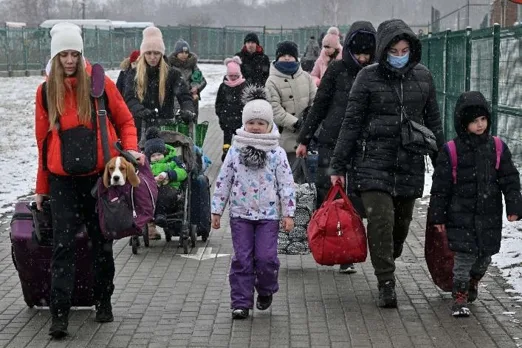
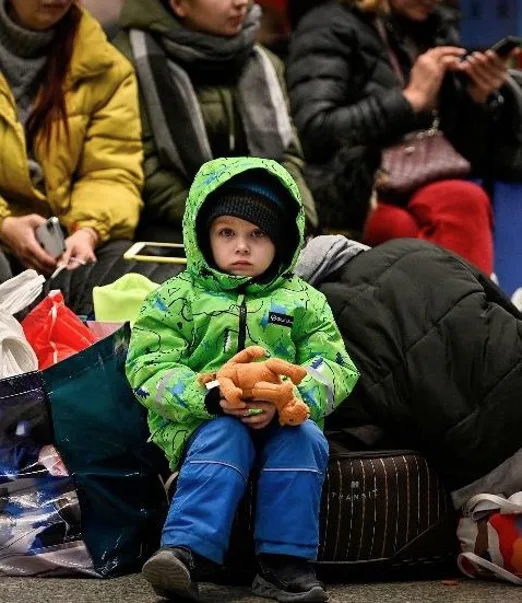
On the Ukrainian side of the border, scenes that are impossible to forget took place. Fathers said goodbye to their wives and children, knowing that they might see them for the last time. A few years old children did not understand why their father did not get on the bus. Mothers hid their tears in an attempt to keep calm for their children. Many families were separated in just a few minutes. And no one knew where he would go on the other side of the border.
Hundreds of thousands of such people came to Poland every day. Help had to be created immediately. There was no time for procedures or long deliberations. Local governments, non-governmental organizations, parishes, schools, companies, firefighters, scouts and ordinary residents have launched the largest spontaneous humanitarian aid campaign in the modern history of Poland. Thousands of families have opened the doors of their homes to complete strangers. Sports halls were turned into accommodation, restaurants cooked meals for free, drivers picked up refugees from stations around the clock and drove them to safe places.
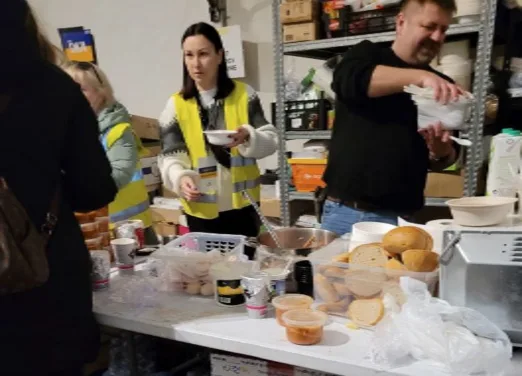
No one asked about nationality, views or religion. The most important thing was one thing – to help.
In our Rotary Club Warszawa City, the day after the outbreak of the war, we established the club’s Committee for Aid to Ukraine. Each subsequent hour brought new calls and new requests for support. We organized housing, transport, food, clothing and hygiene products. However, we knew that thousands of people come to Warsaw every day after a multi-day journey and the first thing they need is warmth.
Not just a warm room. Not just a blanket. Also a hot meal that will make you feel safe at least for a moment.
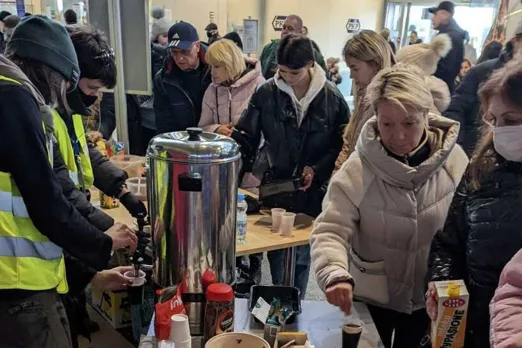
One of the most important places on the map of Warsaw has become the Warszawa Zachodnia bus station. It was here that hundreds of buses and trains from the border crossing arrived every day. The City of Warsaw immediately built a heated reception pavilion. Volunteers served hot meals, doctors provided first aid, psychologists talked to children, and city employees directed refugees to the apartments of Warsaw residents, who offered their homes without a moment’s hesitation.
It was this image that I saw on television. The cook poured more portions of hot soup. I looked at the screen and wondered what I could do. On a daily basis, I manage the Institute of Consumer Sensory Research, so we have a professionally equipped kitchen. At the same time, I was working on a book dedicated to soups, “Andre’s World of Soups”. I was increasingly fascinated by the fact that in every culture there are dishes that are much more than food. They are a symbol of home, childhood and a sense of security.
Executive Council (2016-2018)
In Poland, such a soup is broth (chicken bouillon). It’s the taste of a family home. The taste of Sunday dinner. A taste of returning after a long journey. From consumer research that I once conducted, I know that for most Poles there is no more homemade soup. I always know that when I come back from abroad, my mother will be waiting for me with a plate of hot chicken broth.
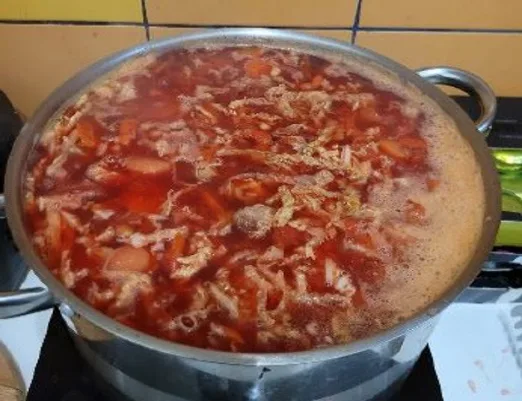
I thought then: And what soup gives Ukrainians the same sense of home? The answer was obvious. Ukrainian borscht. Not just beetroot soup, but a symbol of Ukrainian culture, inscribed by UNESCO on the List of Intangible Cultural Heritage in Need of Urgent Protection.
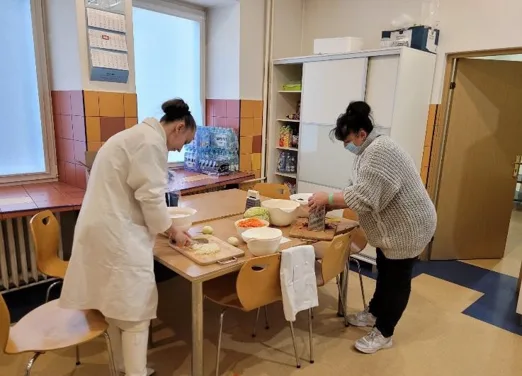
We made the decision immediately. I asked Aliona Shpak from our Rotary club, who comes from Ukraine, and a notary from Odessa, who herself fled to Polish just a few days earlier, to help prepare real Ukrainian borscht.
It was not easy. Every Ukrainian family has its own recipe and everyone considers it the best. After a few hours of cooking, we had forty liters of borscht ready. We also packed fresh bread and cream and set off for Warsaw West.
On the spot, it turned out that there was a huge traffic around the station. Police officers were driving cars and there was practically nowhere to park. When they heard that we had brought borscht for refugees, they gave us their own parking space without a moment’s hesitation. “We can do without parking space for a while,” they said.
This is what Poland looked like then. Everyone helped as much as they could.
The hall was very crowded. The cook looked into our pot. “We already have a lot of tomato soup,” he said with a smile. “But borscht will also come in handy. I handed him five loaves of sliced bread and a five-liter bucket of cream. Everyone should add one or two table spoons to their portion.
He laughed. “Sir, we don’t have time for such ceremonies here. The easiest way will be to pour everything into the pot. I replied almost imploringly: “Please don’t do that. In Ukraine, borscht is eaten in this way. He agreed. After a few minutes, he returned. “You were right, it works,” he said. “Everyone puts cream exactly the way they like. The news that real Ukrainian borscht was served spread quickly. Not even an hour passed, and the whole forty liters disappeared.
The tomato soup was still waiting.
However, I remember an older woman the most. She served borscht to her daughter and two granddaughters. She looked at them with tears in her eyes and said quietly:
Look… The Poles even thought about welcoming us with Ukrainian borscht.
The cook who was standing next to me pointed at me. “It was this gentleman who cooked it.
The woman came up and hugged me tightly. She said that they had escaped from the Sumy area. They spent five days on the road. All this time, they ate mostly sandwiches and drank water. They arrived in Warsaw extremely exhausted.
I will never forget that moment. Then I understood that humanitarian aid is not just a roof over your head, medicine or a hot meal. It is also respect for another person.
For his language. For his tradition. For the memories he had to leave behind. Forty liters of borscht could not stop the war. But for people who had just lost their home, one bowl of this soup said more than a thousand words.”You are safe here. We know who you are. You are welcome here.”
Today, in retrospect, I think that an agreement between nations is not always born during conferences, debates or the signing of international agreements. Sometimes it starts with one simple gesture. From a bowl of hot borscht. This day makes it clear that Service Above Self does not always require big projects. Sometimes it is enough to see what the other person really needs.



 English
  French
  Spanish
  Italian