
International Forum Rotary ICC | Italy 2026
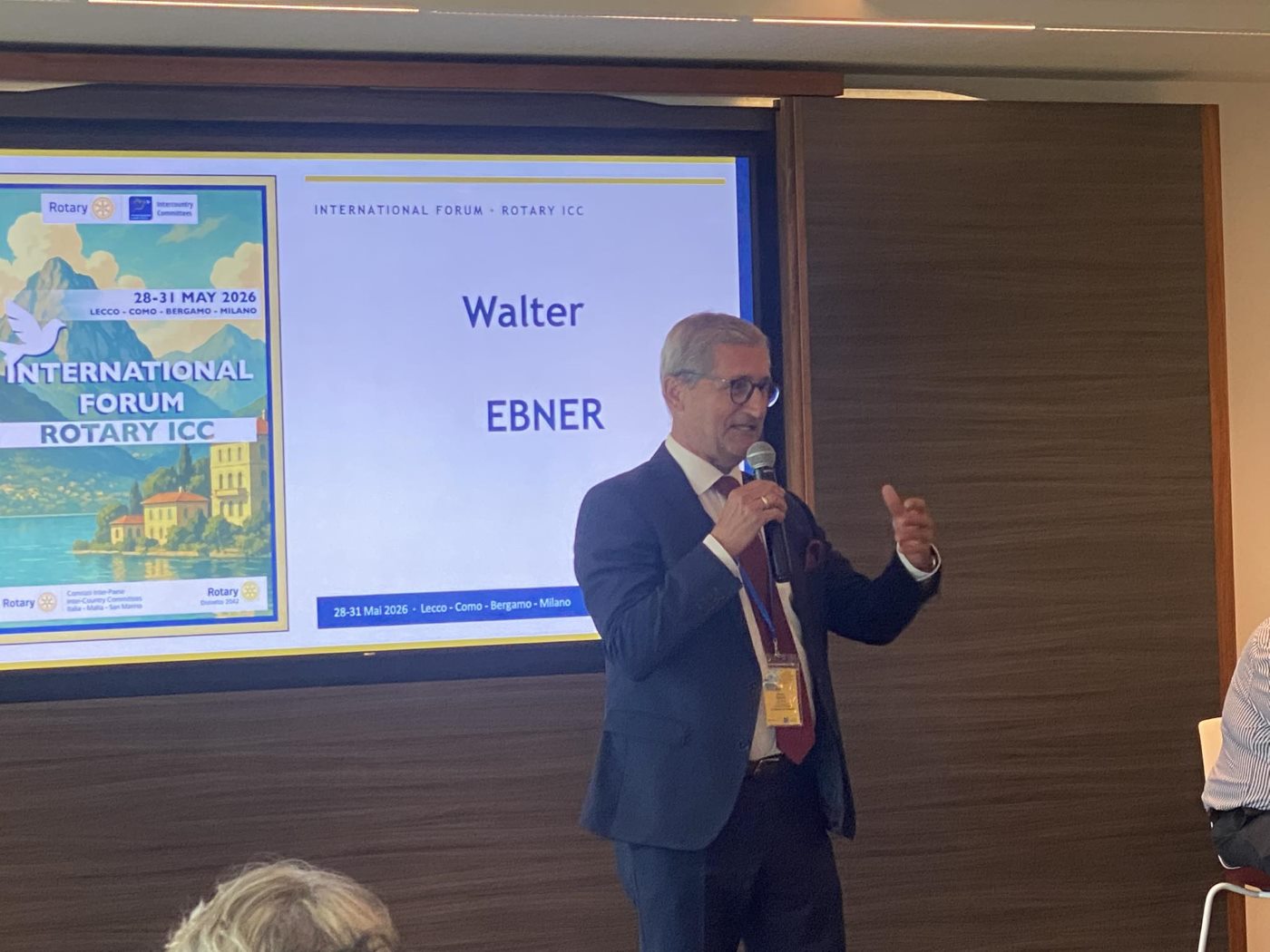
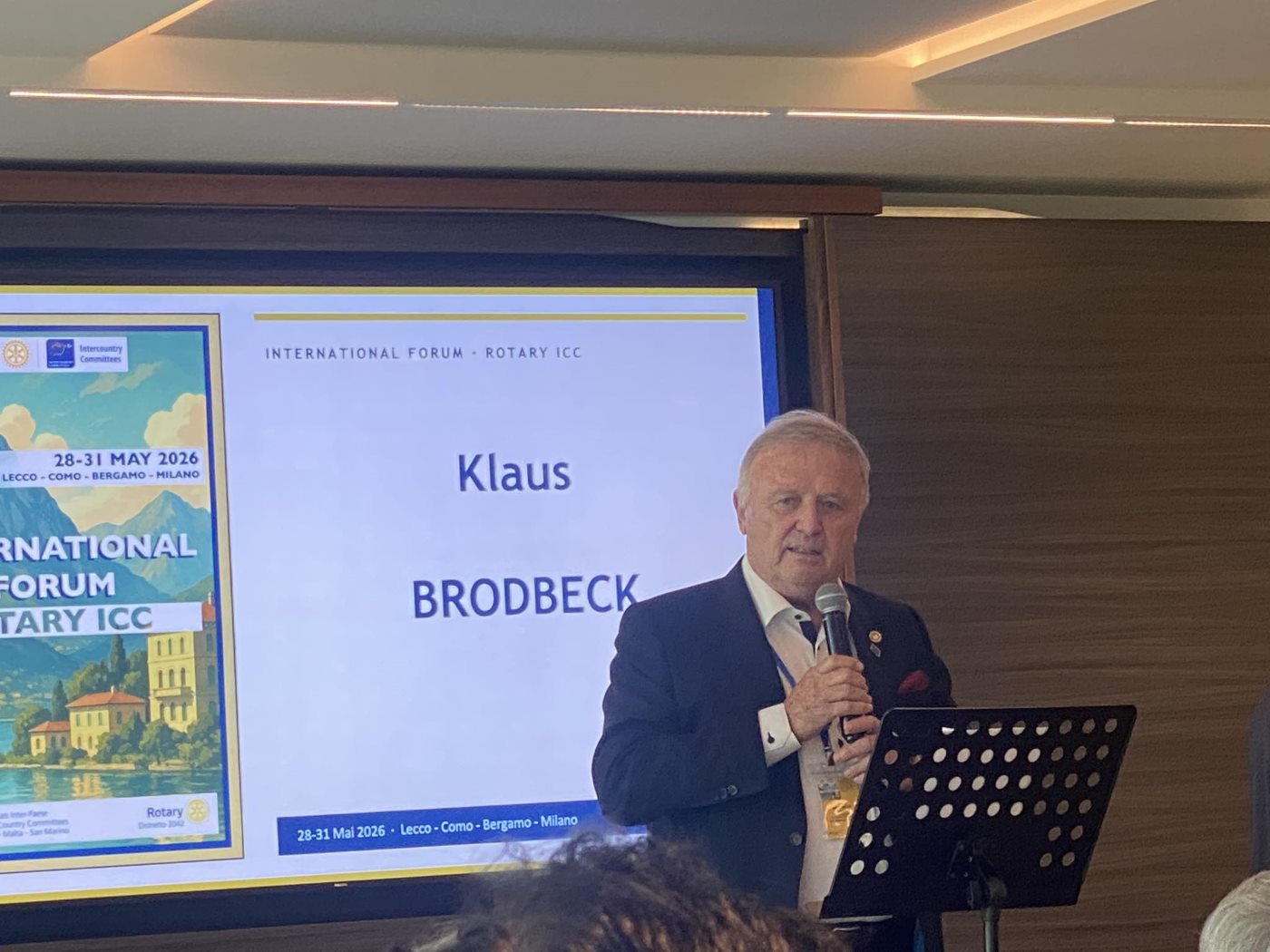
Rotarians from across the world have gathered in Italy for the International Forum Rotary ICC, that started on 28 May and will continue until 31 May 2026 in Bergamo.
This important gathering has brought together Intercountry Committee members in the true spirit of Rotary, strengthening friendship, cooperation and peace across borders.
Events like these remind us of the unique role ICCs play in building meaningful international relationships, sharing best practice, and opening doors for service projects that connect our beautiful countries, districts and communities.
A wonderful moment of fellowship, collaboration and global Rotary connection!
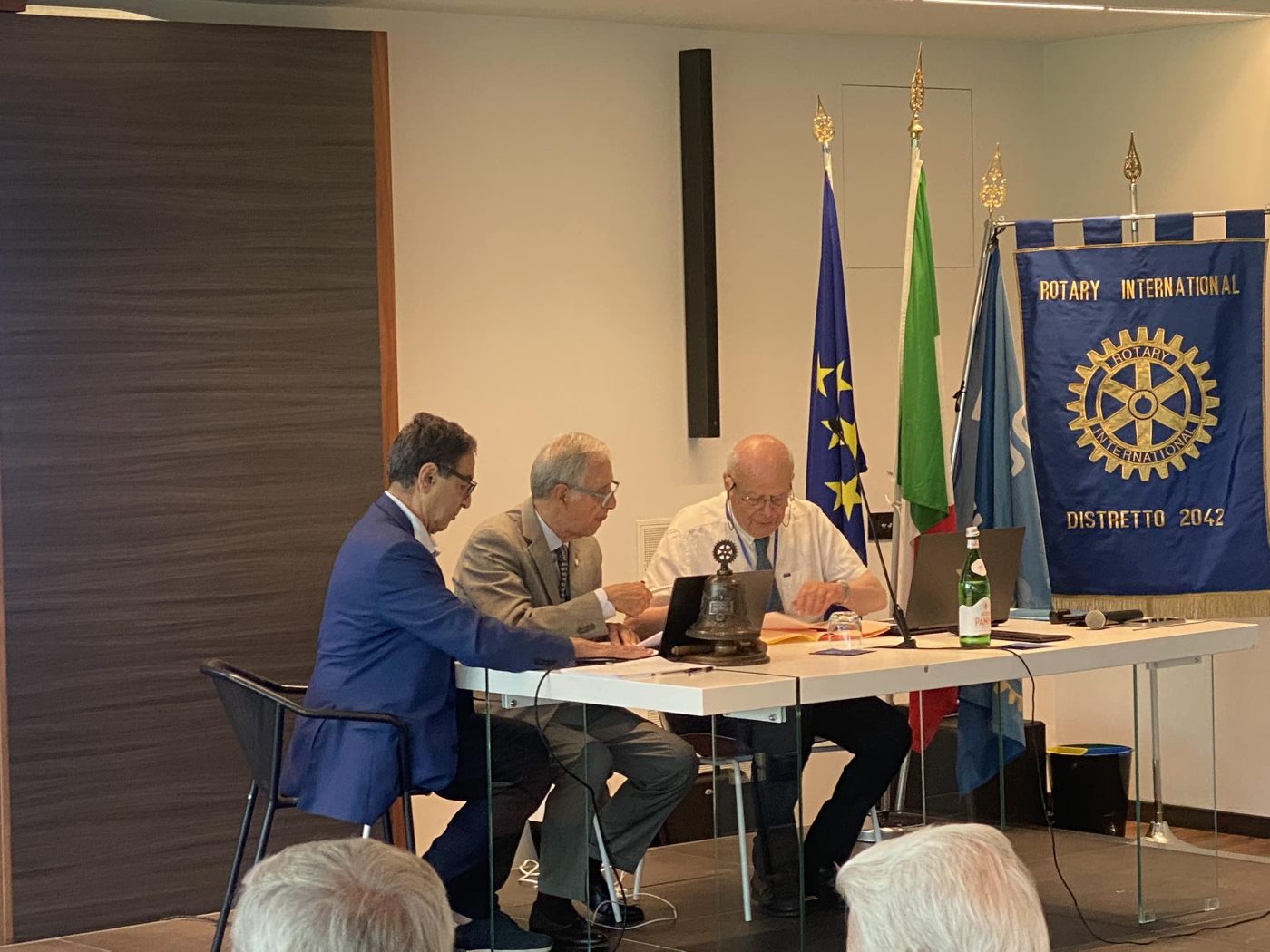
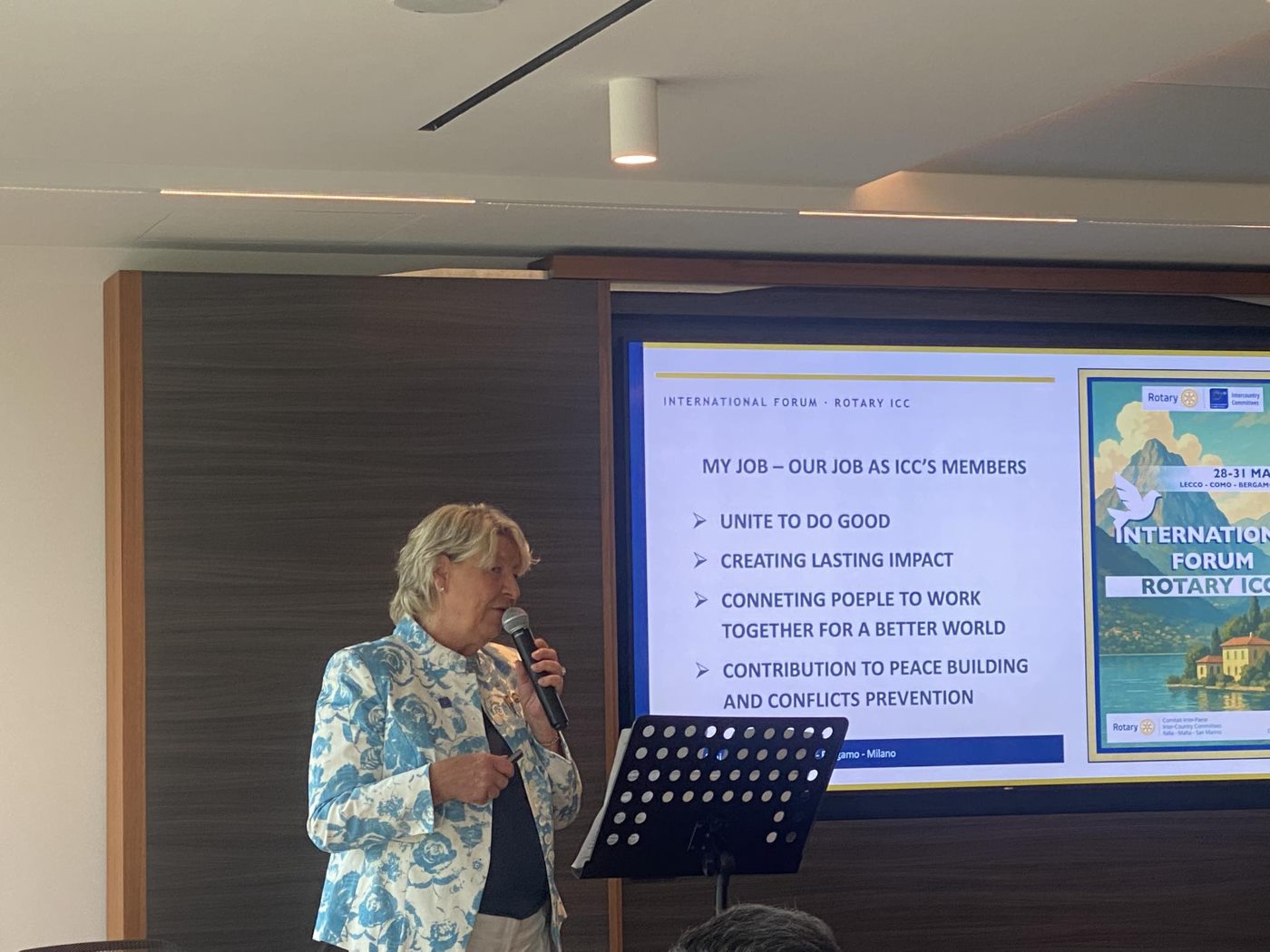
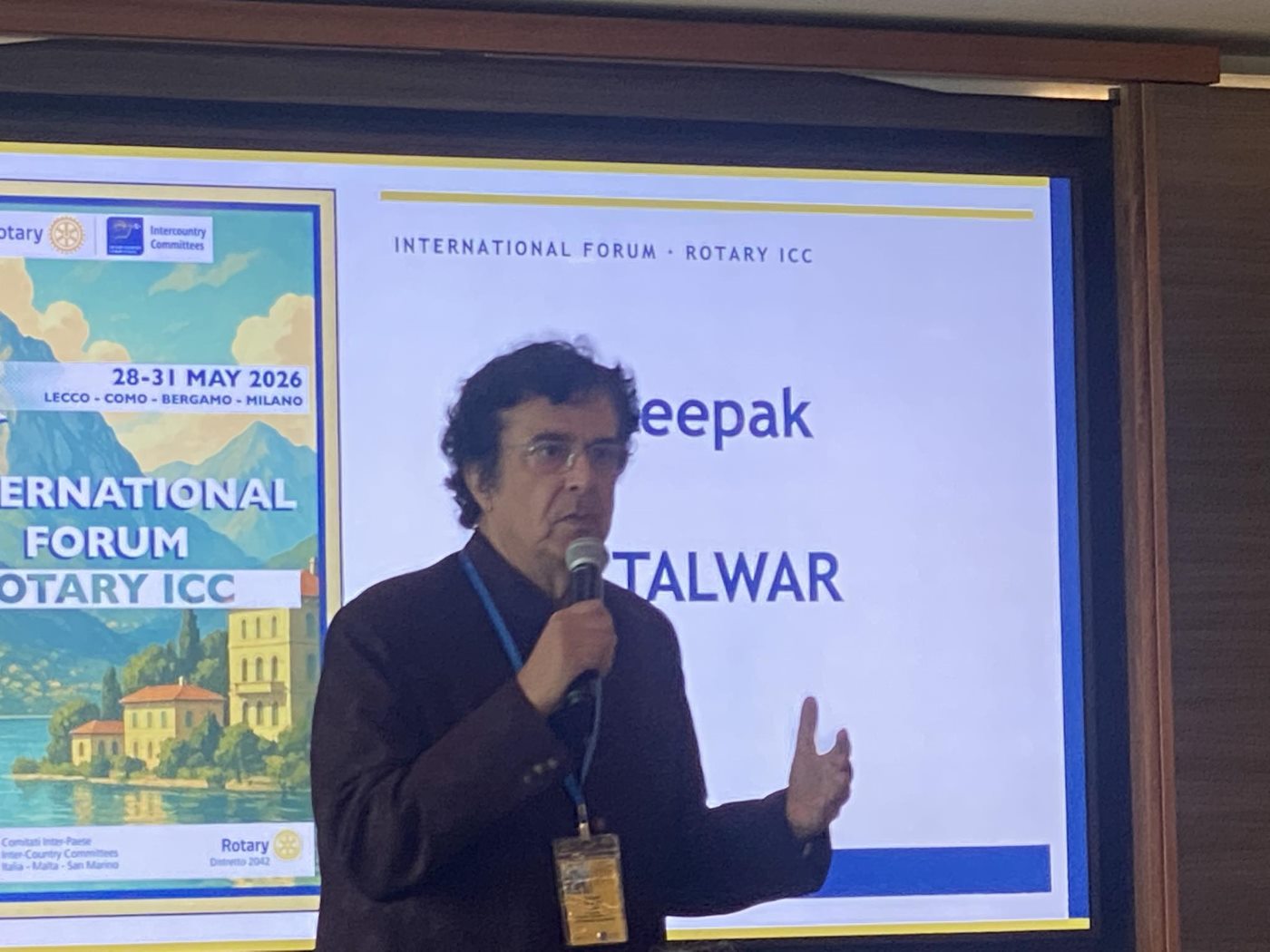
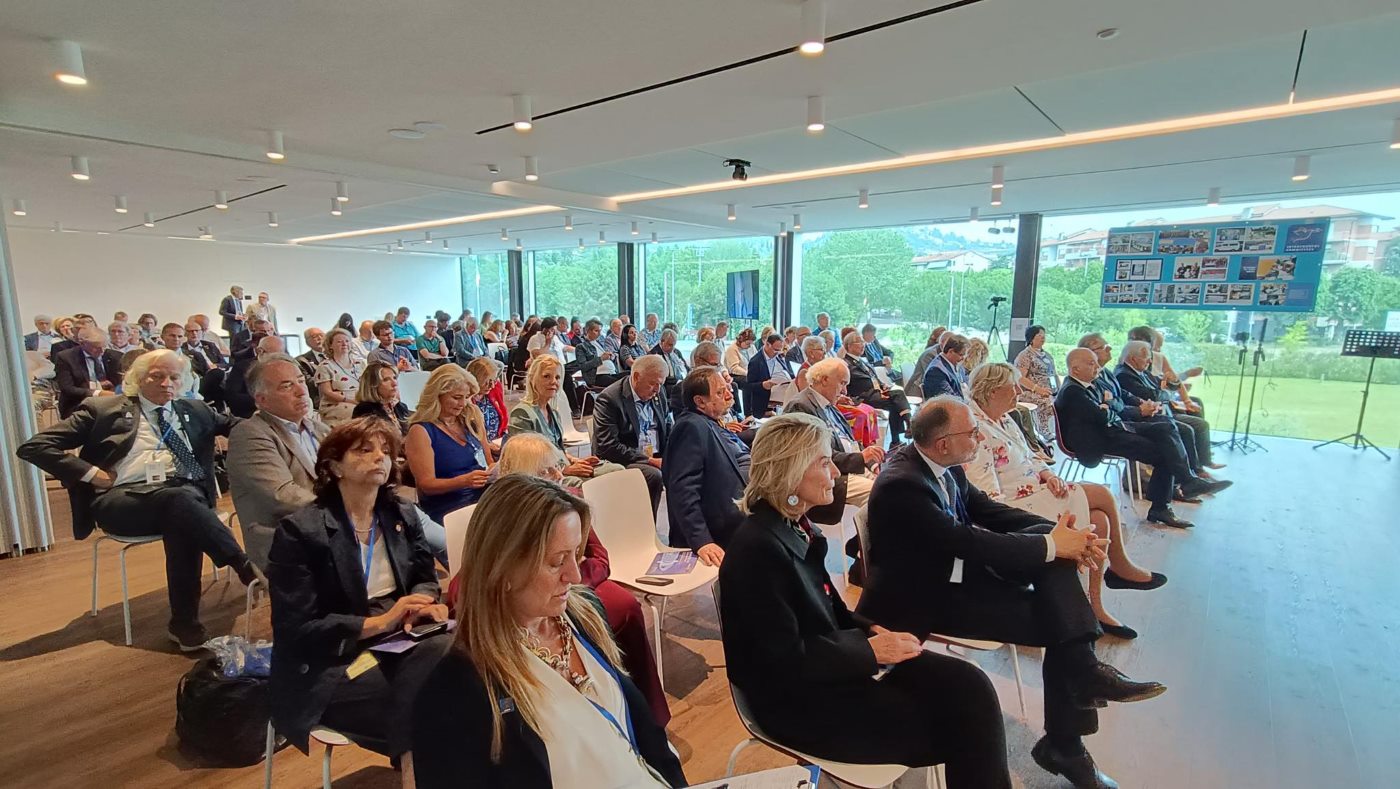
Bergamo, Como, Lecco, Milan – 28/31 May 2026 Final Report
From 28 to 31 May 2026, the International Rotary ICC Forum took place in Italy, between Bergamo, Como, Lecco and Milan. Promoted within the framework of Rotary’s Intercountry Committees, the Forum culminated on Saturday, 30 May, in the ICC World Peace Forum.
The meeting brought together Rotarians from many countries, confirming the deepest vocation of the ICCs: to be places of dialogue, instruments of international friendship, discreet yet remarkably solid bridges between cultures, communities and peoples. At a time when the word “peace” often risks being consumed by rhetoric or weakened by a growing familiarity with war, the Bergamo Forum had the merit of restoring to it density, responsibility and concreteness. The event represented a moment of particular significance in the life of the ICCs: the conclusion of the mandate of Nathalie Huyghebaert, ICC EC President for the 2024-2026 biennium; the passing of the baton to Annemarie Mostert, ICC EC President for the 2026-2028 biennium; the election of the Chair for the 2028-2030 biennium; and a programme combining the General Assembly, the ICC World Peace Forum, cultural visits and moments of fellowship.
Welcoming participants to Bergamo
The Forum opened on Thursday, 28 May, in Bergamo, at Life Source, the venue for the meetings and the place where participants were welcomed. Registration and the welcome dinner represented the first concrete gesture of the gathering: not merely an organizational formality, but the beginning of a temporary community, brought together from different countries around the same idea of service.
From the very first evening, the true spirit of the ICCs emerged: the ability to turn distance into closeness, difference into richness, and mutual knowledge into a premise for cooperation. Every great project of peace begins in this way: not with solemn formulas, but with the patience of encounter, with trust patiently built, and with the willingness to listen before speaking.
The General Assembly and the continuity of ICC leadership
Friday, 29 May, was devoted to the General Assembly of the ICC Executive Council, a central moment in the institutional life of the Intercountry Committees. Within this framework, a significant step was taken in the continuity of the international leadership of the ICCs.
Nathalie Huyghebaert, ICC Executive Council Chair 2024-2026, brought her mandate to a close, leaving the mark of a chairmanship lived in the spirit of Rotary friendship, participation and international responsibility. Her leadership forcefully recalled the meaning of the ICCs as a living, non-bureaucratic network, capable of bringing people together before structures, and communities before acronyms.
The handover to ICC EC President Annemarie Mostert, for the 2026-2028 biennium, was one of the most important moments of the entire Forum. The new phase opening under her leadership stands in
a line of continuity and renewal: continuity in the founding values of the ICCs; renewal in the need to respond to an increasingly fragmented world, in which international dialogue requires clarity, courage and vision.
Particularly significant was the election of Alessandro Pastorini as ICC EC President for the 2028-2030 biennium. Already National ICC Chair for Italy, Malta and San Marino, Pastorini has in recent years been a point of reference for the development and consolidation of the ICC network. His election took on a value that goes beyond the personal dimension: it is the recognition of patient work, of credibility built over time, and of an ability to weave international relations in the finest Rotary spirit. The day then opened itself to the beauty of the territory, with the visit to Como and the dinner at Castello di Casiglio. These moments, too, had a fully Rotarian significance: not mere pauses in the institutional programme, but opportunities to strengthen relationships, deepen mutual knowledge, transform formal dialogue into friendship and friendship into future cooperation.
The ICC World Peace Forum: peace as a shared responsibility
The heart of the International Rotary ICC Forum was the ICC World Peace Forum held on Saturday, 30 May, and dedicated to the theme of peace. The day gathered Rotarians and international guests around a theme that belongs to the very roots of the Rotary experience: the building of peace through understanding, listening, mediation, culture and cooperation among peoples.
The morning opened with the simple solemnity of symbols: the bell, the anthems and the presentation of the flags. It was a beginning of strong evocative value: flags, languages and national identities not as reasons for separation, but as signs of a plurality called to recognize itself within a common horizon.
Richard Knowlton guided the various moments of the morning with balance and authority, giving continuity to a particularly rich programme in which Rotary, institutional, philosophical, journalistic, spiritual and diplomatic voices intertwined.
The opening greetings gave the day a broad framework. Stefano Artese, Governor of District 2042, welcomed the participants by recalling the value of the ICCs as a concrete form of Rotary diplomacy: not a diplomacy of chancelleries, but a diplomacy of consciences, of bonds, of trust built over time. The Mayor of Bergamo, Elena Carnevali, brought the greetings of the host city, underlining the value of Bergamo as a community open to dialogue, civic responsibility and the daily construction of coexistence. Her address recalled that peace does not belong only to great international relations, but also takes shape in the life of cities, in the care of social bonds, in attention to people and in the capacity of institutions to promote inclusion and trust.
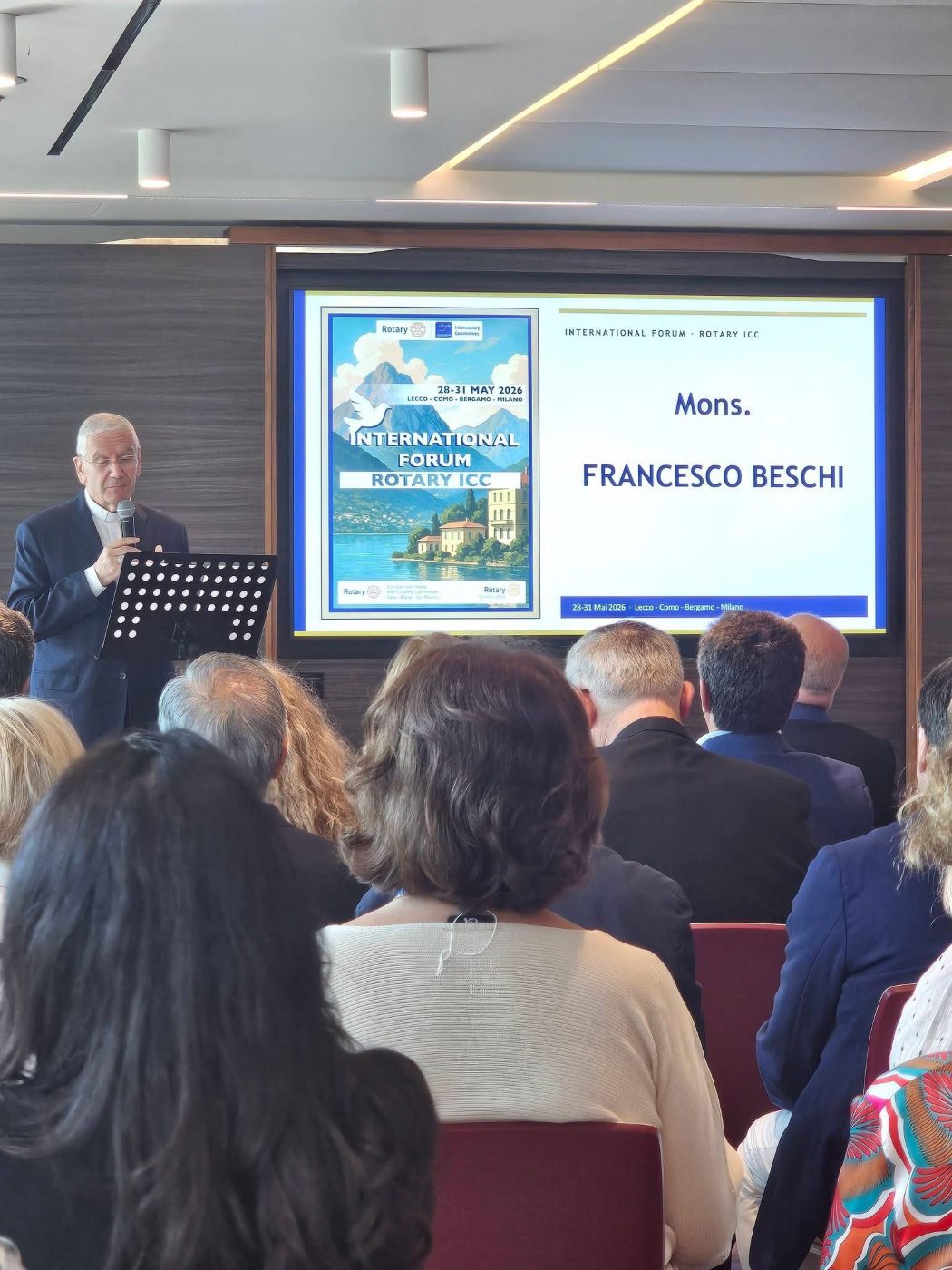
The Bishop of Bergamo, Monsignor Francesco Beschi, offered a reflection of profound spiritual value, recalling peace as a moral task before it is a political one. His words invited those present not to surrender to the logic of conflict and to preserve hope as an active responsibility. From this perspective, peace is born of concrete fraternity, of the ability to listen, to forgive, and to recognize in the other not a threat, but a presence to be welcomed.
The address by ICC EC President-Elect Alessandro Pastorini, National ICC Chair for Italy, Malta and San Marino, brought attention back to the deep nature of the Intercountry Committees: a network capable of uniting clubs, districts and communities beyond national borders. Pastorini interpreted the ICCs as a laboratory of international relations in which friendship is never an end in itself, but becomes a premise for service, cooperation and mutual understanding.
Nathalie Huyghebaert, speaking as ICC EC President for 2024-2026, gave the day the breadth of international continuity. Her reflection recalled the meaning of a mandate brought to completion, but also the strength of a journey that does not end. The ICCs live through the passing of batons, shared responsibilities, and leaderships that are not exhausted in the exercise of an office, but leave traces, orientations and examples.
Among the first thematic voices of the morning, Monica Napoli, journalist and Sky TG24 correspondent, brought the perspective of journalism from places of crisis and frontier. Her contribution, devoted to the Mediterranean and to the “borders of Europe”, recalled that peace cannot be understood solely through the categories of geopolitics. It passes through the faces, bodies, families, journeys, fears and hopes of those who inhabit the most fragile thresholds of our time. To report on war, migration and the fractures of the world means preventing suffering from becoming a number, tragedy from becoming habit, and indifference from becoming a second form of violence.
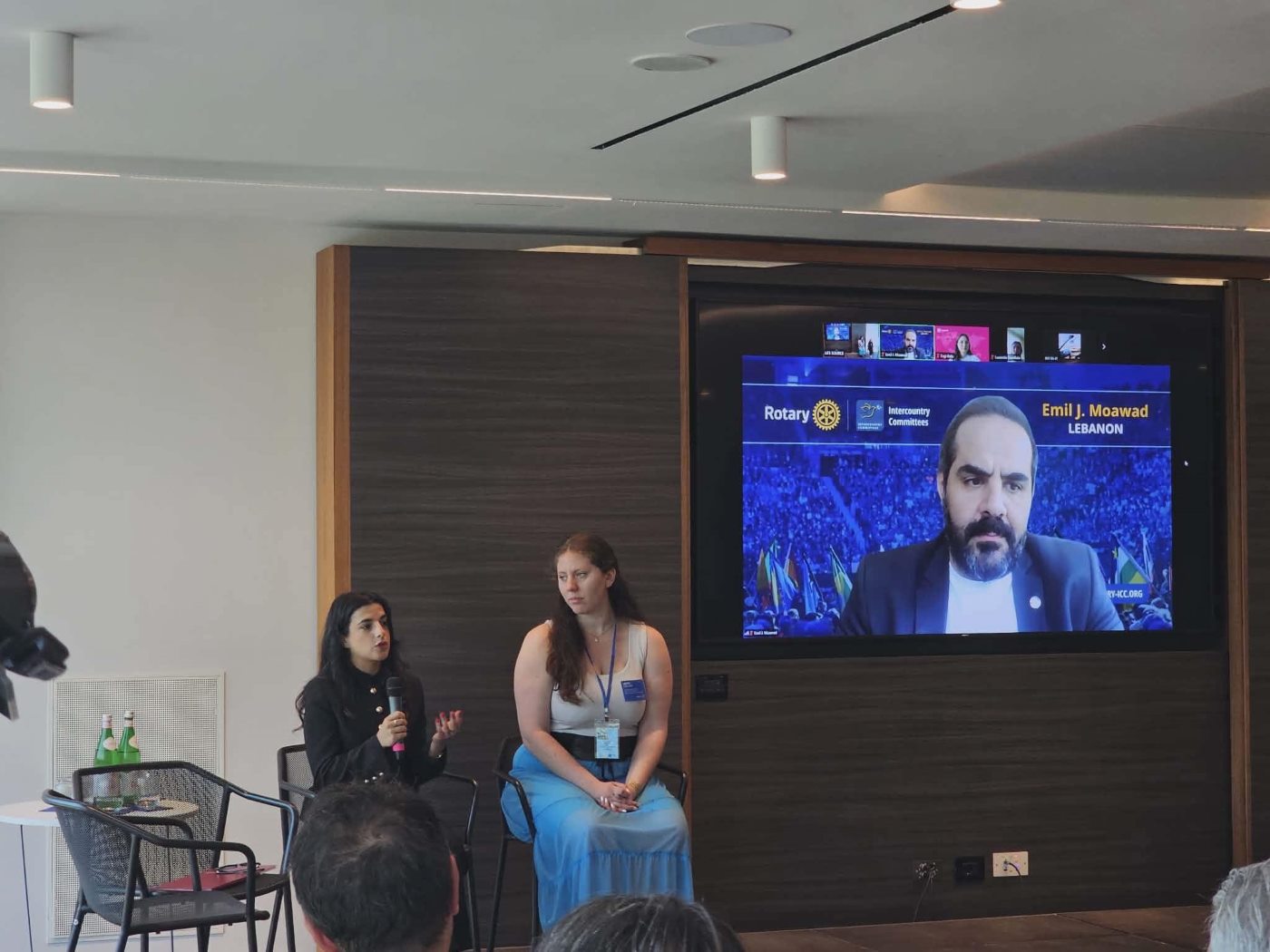
The panel “Rotaract/Rotary/ICCs – Together for Peace”, moderated by Emil Moawad via Zoom, opened a particularly significant intergenerational perspective. With Ezgi Batu, Laura Sasse and Elise Nassim, the Forum gave space to the voice of young leaders, of Rotaract, and of a new call not only to inherit Rotary, but to renew it. Their contribution showed that peace cannot be entrusted solely to the memory of those who have already travelled a long road: it needs the energy, freedom and moral intelligence of young people. In this dialogue between Rotary, Rotaract and ICCs, one of the decisive challenges of the future became visible: making peace a language shared across generations.
The lecture by Professor Donatella Di Cesare, entitled “The Responsibility of Peace. A Common Commitment”, was one of the highest cultural moments of the day. The philosopher removed peace from the vagueness of good intentions and restored it to its most demanding dimension: that of responsibility. Peace is not merely the absence of war, nor a simple balance between opposing forces; it is an ethical, political and human commitment. It is the ability not to grow accustomed to violence, not to regard war as an inevitable destiny, and to preserve the word when the world seems to prefer the noise of weapons. Her intervention placed at the centre the duty to recognize the other: because peace begins when the other ceases to be a threat and once again becomes a face, a story, a dignity.
After the break, Professor Giorgio Del Zanna, of the Community of Sant’Egidio, developed the theme “Mediation begins with us”. His reflection brought to the Forum the experience of a community that for decades has been active in processes of dialogue, reconciliation and international mediation. The message was powerful: mediation is not only a diplomatic technique, but an inner posture. It begins in the way we listen, in the words we choose, in the daily conflicts we decide not to fuel, and in the willingness to create spaces where only walls seem to exist. Peace, before becoming a treaty, must become a style.
The session “Peace in a Fragmented World. The Strategic Role of Civil Diplomacy and Global Networks”, introduced by DGN Michel Davoudian, further broadened the horizon of reflection. With Mazin Qumsiyeh, Shab Elawar, Peace Fellow Elise Nassim and Ambassador Daniele Verga, the Forum addressed the theme of civil diplomacy and global networks in a world marked by deep fractures. Peace, in this perspective, cannot be entrusted only to states or official negotiations. It needs vigilant civil societies, universities, local communities, associative networks, international organisations and leaders capable of generating trust. The ICCs proved once again to be a precious form of this civil diplomacy: perhaps less visible than institutional diplomacy, but often more capable of preparing the ground for encounter.
The concluding part of the morning had strong symbolic value. With the ICC Peace Prize ceremony, conducted by Giuseppe Mosci, ICC Secretary, together with ICC EC President Annemarie Mouchet and ICC President Nathalie Huyghebaert, the Forum recognized the value of people and journeys capable of giving concrete embodiment to the ideals of peace. The prize was not merely a celebratory moment, but a reminder of the responsibility of example: peace needs to be narrated, but also recognized wherever someone practices it with consistency.
Michel Davoudian then led the ICC Special Awards, a further sign of gratitude towards those who have contributed to the growth and vitality of the Intercountry Committees. In an international community such as the ICCs, recognition also has a function that goes beyond ceremony: it preserves memory, makes service visible, and strengthens the sense of belonging.
ICC EC President Nathalie Huyghebaert’s concluding intervention, with the ICC Executive Council Team and the Past Presidents present called to the podium, offered the room an image of shared continuity. In that setting, the leadership called to guide the future of the ICCs was presented, with the recognition of the President-Elect for the 2028-2030 biennium.
Finally, ICC EC President Annemarie Mostert, outlined the objectives of her mandate. Her address turned the gaze towards the future, indicating the need to strengthen the network of Intercountry Committees, promote ever wider participation, value young people, support collaboration among districts, and make the ICCs increasingly effective instruments of concrete peace. Her vision gave the conclusion of the morning the sense of a new beginning.
The group photographs sealed this moment: not a mere ritual image, but the visible face of an international community gathered around a shared responsibility.
Bergamo and the gala dinner in Lecco
After lunch, the programme continued with a visit to Bergamo. To walk through Bergamo after a morning devoted to peace meant entering into dialogue with a layered city, made of walls, stones, squares and memories. Every place visited recalled that European history is at once beauty and conflict, heritage and responsibility, wound and rebirth.
In the evening, the gala dinner at the “Griso” restaurant in Lecco concluded the central day of the Forum. This moment, too, had a fully ICC value: fellowship as a space in which relationships are consolidated, words become friendship, and friendship becomes cooperation.
In Rotary, fellowship is never an ornament. It is part of its moral grammar. It is the place where people from different countries learn to recognize one another, to trust one another, and
to imagine possible projects together. After a day dedicated to peace, gathering at table meant giving concrete form to what had been thought and said during the Forum.
Milan and the conclusion of the itinerary
On Sunday, 31 May, the programme concluded with a visit to Milan, the final stage of the Italian itinerary. After Bergamo, Como and Lecco, Milan offered participants the image of a European city, dynamic and international, in which history, art, economy and innovation coexist in an original way.
The visit completed a route capable of bringing together different yet complementary places: Bergamo as the venue of welcome and of the Forum, Como as a landscape of beauty and dialogue, Lecco as the setting for the gala evening, and Milan as a final opening towards a metropolitan and global dimension.
Concluding assessment
The International Rotary ICC Forum in Bergamo 2026 represented a moment of great significance for the international ICC community. The conclusion of ICC EC President Nathalie Huyghebaert’s mandate, the handover to ICC EC President Annemarie Mostert, the election of Alessandro Pastorini as ICC EC President for the 2028-2030 biennium, the participation of high-profile speakers and the richness of the cultural programme gave the event an institutional and human value of particular intensity.
The Forum showed that the ICCs are not merely bodies linking countries. They are living places of Rotary diplomacy. Places where peace is thought, narrated, discussed and prepared. Places where international friendship becomes method, listening becomes service, and relationship becomes a possibility for the future.
In a fragmented world, marked by fears, borders, conflicts and new forms of loneliness, the message that came from Bergamo was clear: peace is not born of naivety, but of responsibility; it is not born of the absence of differences, but of the ability to inhabit them; it is not born of solemn declarations, but of communities that choose to meet, to know one another and to act together.
This is perhaps the highest legacy of the Forum: to have reminded us that Rotary, through the ICCs, can still be a school of dialogue, a fabric of trust and a laboratory of international humanism.


Rotary Izmir Dokuz Eylül
District 2440, Turkey - Past District Governor
Past Rotary Public Image Coordinator
Turkish Rotary Magazine board member
Active member of the WASH and SRoF fellowships
TRF CADRE


 English
  French
  Spanish
  Italian