
Keeping the Russian-German Bridges Alive
Music, Dialogue and Friendship Across Borders
The ICC Russia–Germany brings together Rotarians committed to strengthening mutual understanding, friendship and cooperation between our countries. Revived in 1998, the Committee has a long tradition of connecting Rotary members, clubs and districts across borders, encouraging club partnerships and creating opportunities for cultural, youth, professional and humanitarian exchange. Today, the ICC also serves as a platform for the wider German- and Russian-speaking Rotary community, welcoming the active participation of Rotarians from Austria, Switzerland, Liechtenstein and Luxembourg.
This article presents a joint interview with the leadership of the Committee and the founders of one of the initiatives it supports – “Musik für den Frieden – Музыка ради мира” (“Music for Peace”). Through their different perspectives, they share the story of how the project began, how its cooperation with the ICC Russia–Germany developed, what has already been achieved, and why maintaining personal contacts and cultural dialogue remains so important today. Together, their voices tell a story not only about music, but about friendship, mutual understanding and the human connections that continue to build bridges between Russia and Germany.
To stay in contact:
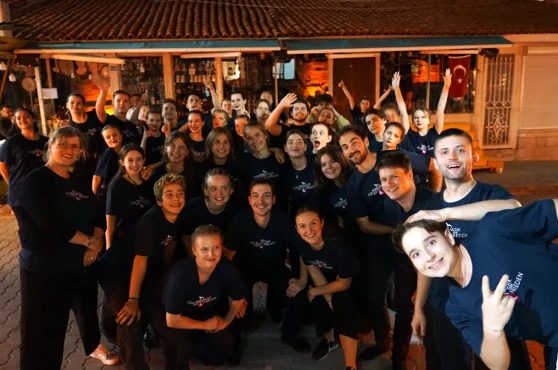
What is “Musik für den Frieden” and how did it begin? What was the original idea behind the project?
Thomas and Ulrike Vogt – Founders of “Musik für den Frieden”, musicians and music educators, RC Müllheim-Badenweiler:
“Musik für den Frieden – Музыка ради мира” is a peace initiative bringing together young people from Germany and Russia. Through joint peace concerts and the production of music films, these young people aim to demonstrate that even in times of conflict it is possible to meet one another with friendship and trust. In this way, they hope to plant a seed for peaceful coexistence in Europe in the future.
For the young people involved, the successful example of Franco-German reconciliation gives hope that this initiative is not a naive illusion. Germany and France were once regarded as hereditary enemies and fought each other for centuries. Yet this hostility was ultimately transformed into a stable friendship, first through impulses and strong commitment from civil society – including teacher Marthe-Marie Dortel-Claudot, Pax Christi and trade unions – and, 19 years later, through political leaders such as French President Charles de Gaulle and German Chancellor Konrad Adenauer taking up those impulses. The millions of school exchanges between the two countries also played a significant role.
Peace is like love: neither can simply be demanded; both must be given and lived together. Demanding love or peace can lead to conflict and violence. The encounters of young people within “Musik für den Frieden” take place in the sphere of art, music and culture – a sphere in which human beings can experience their humanity. As Friedrich Schiller wrote in his Letters on the Aesthetic Education of Man: “Man is only fully human when he plays,” that is, when he engages creatively and artistically.
“Musik für den Frieden” was founded in 2018 by musicians and music educators Thomas Vogt and Ulrike Vogt (Rotary Club Müllheim-Badenweiler; RPIC Zones 15–16, 2025–2028). A major motivation for both of them was the wish to leave a peaceful and liveable future to their children and grandchildren, and indeed to all children. They decided to become involved where conflicts in Europe were escalating again, where bridges were being broken, walls were being built and dialogue was increasingly falling silent. In Andrey Koryakov, director of the Premier Theatre in Tver, they found an ideal partner with whom they immediately connected both personally and artistically.
In 2019, the first encounters and joint concerts took place in Tver and Moscow. A German delegation of more than 70 participants – young people and accompanying adults – travelled to Russia for ten days. Even then, the Rotary Club Moscow Humboldt provided organisational and financial support. A few weeks later, the Russian young singers and dancers made a return visit, giving concerts in southern Germany.
During the COVID-19 pandemic, three music films were produced through online collaboration and published on the project’s own YouTube channel. From 2023 to 2025, German and Russian young people met at Music Peace Camps in Türkiye, culminating in major concerts in Izmir, Çeşme and Bursa.
Regional television stations in Germany and Russia, numerous newspapers and other media – including Rotary magazines in Russia, Germany and Türkiye – reported on the peace projects. In 2022, “Musik für den Frieden” received the prestigious Göttingen Peace Prize, and in 2026 it was awarded the Löwenherz Peace Prize.
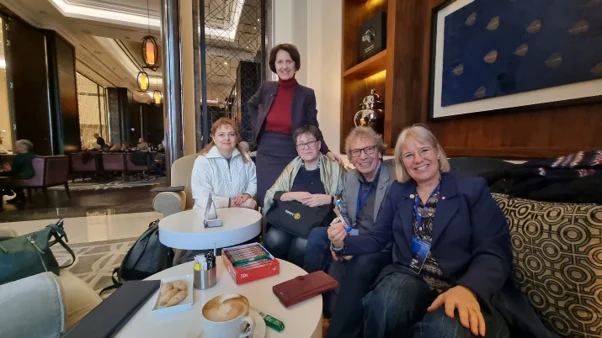
How did the project come into contact with the ICC Russia–Germany, and how did the cooperation begin?
Jens Strohschneider – Chair of the Russian Section of the ICC Russia–Germany, 2025-2026; RC Moskau Metropol:
At the Rotary Peace Conference 2025 in Istanbul, amidst the convergence of the International ICC Summit, a profound connection was forged between the Russian Section of the ICC Russia–Germany and the creators of the “Musik für den Frieden” project, Rotarians Ulrike and Thomas Vogt.
Against a backdrop of a global dialogue strictly centered on peace, Thomas and Ulrike presented their visionary initiative, using the universal language of music as a vehicle for cross-border healing. Guided by these shared values, a Belarusian Rotarian friend bridged the gap, introducing us to a project that transcended geopolitical borders.
What began as a single introduction quickly blossomed into a deep testament to Rotarian friendship. Over the following days, the historic streets of Istanbul provided the scenery for several inspiring meetings and an unforgettable dinner. Wrapped in warm Turkish hospitality, we shared ideas, laughter, and a collective commitment to harmony.
This first encounter beautifully illustrated the core essence of Rotary: that true peace is built not through abstract treaties, but through genuine human connection, shared cultural bridges, and the enduring bonds of international goodwill.
What steps have already been taken by the ICC to support “Musik für den Frieden”?
Natalia Anisimova-Krucker – Secretary of the ICC Russia–Germany; Rotary E-Club of Russia:
Since the first meeting with the project’s founders at the Rotary International Presidential Peace Conference in Istanbul in February 2025, the Russian and German Sections of our ICC have been meeting online every month, using simultaneous interpretation. At these meetings, we regularly discuss, among other matters, developments relating to this project.
Under the leadership of the non-profit organisation Musik für den Frieden e.V. and with the support of the Germany–Türkiye and Russia–Germany ICCs, a Music Peace Camp took place in Türkiye in October 2025. In addition to providing financial support, representatives of the Türkiye, Germany and Russia Intercountry Committees personally participated in the programme. It is also important to acknowledge the support of the highly active Rotary Peace Committee of District 2440 for the Music Peace Camps. Following the 2025 Music Peace Camp, two articles were published in Rotary magazines in Russia and Germany.
In May 2026, two members of the German Section of the ICC attended the District Conference of Russian District 2223 in Moscow. The programme included a presentation of the ICC Russia–Germany and a talk on the “Musik für den Frieden” project, which generated considerable interest among participants.
From 23 October to 1 November 2026, the Music Peace Camp will take place once again – this time in Germany. Sixty young musicians from Russia and Germany will participate. The total cost of the project exceeds €60,000. In preparing the visit of the Russian participants – leaders and members of the Premier children’s theatre studio from Tver – our ICC assisted with visa matters at the German Embassy in Moscow.
To secure the support of Russian Rotarians for this project, which aims to foster mutual understanding between nations, the Russia–Germany ICC published a detailed article in the August issue of Rotary Russia.
As part of the ongoing development of “Musik für den Frieden”, our ICC is considering the idea of organising a major international music festival in Russia featuring artistic groups from Russia, Germany and Austria.
What does the project mean from the German perspective? What perspectives and plans are there for further cooperation?
Axel Richter, Chair of the German Section of the ICC Russia–Germany; RC Hildesheim:
The “Musik für den Frieden” project is of great importance to us as German Rotarians because it helps maintain Rotarian connections and friendships with our Russian colleagues.
Especially in times of armed conflict, the civil societies of both countries should remain connected in the spirit of Rotary’s Four-Way Test:
Is it the truth?
Is it fair to all concerned?
Will it build goodwill and better friendships?
Will it be beneficial to all concerned?
At the most recent major concerts of the “Musik für den Frieden” initiative in Izmir and Bursa, Türkiye, in October 2025, we could see the powerful impact these concerts can have. Although the songs were performed in German, Russian and English, their message was understood by everyone.
What unites the worldwide Rotary community is the desire for peace and international understanding. In this spirit, we hope for regular friendly and cultural exchange with our Russian friends and, in particular, for a series of concerts in Germany and Russia.
The language of art and culture becomes especially important when communication between us becomes more difficult.
Why is it important for the Russian side to continue dialogue and personal contacts? Why is it especially important today to support such initiatives and personal exchange between Germany and Russia?
Svetlana Frolova, Chair of the Russian Section of the ICC Russia–Germany since 2026; RC Moskau Metropol:
For the Russian side, it is especially important today to preserve dialogue and personal contacts with Germany. Our relations are much deeper than the circumstances of any particular period. Russia and Germany are connected by centuries of shared history, cultural and intellectual exchange.
These connections can be seen even in the history of our countries’ ruling houses: Catherine the Great was born a German princess, and Russian and German dynasties were closely connected for centuries. German scientists, architects, musicians and entrepreneurs contributed greatly to Russia’s development, while Russian culture has long been part of Germany’s cultural landscape. Goethe, Schiller, Kant and Beethoven are as familiar in Russia as Tolstoy, Dostoevsky and Tchaikovsky are in Germany.
Despite the tragic chapters of our common history, our peoples were able to rebuild trust and create strong cultural and personal ties. Today, when opportunities for communication have become much more limited, it is particularly important not to lose what previous generations have built. Circumstances change, but rebuilding lost trust can take decades.
This is why initiatives such as “Musik für den Frieden” are so valuable. They remind us that Russian-German relations are not only relations between states, but above all between people. Music and culture give young Russians and Germans the opportunity to meet, create something together and discover what unites them.
This is also where I see the special role of Rotary and our Intercountry Committee: to preserve these human bridges and create opportunities for dialogue. The aim is to ensure that, when circumstances change, we will not have to start again from zero – the bridges will still be there.
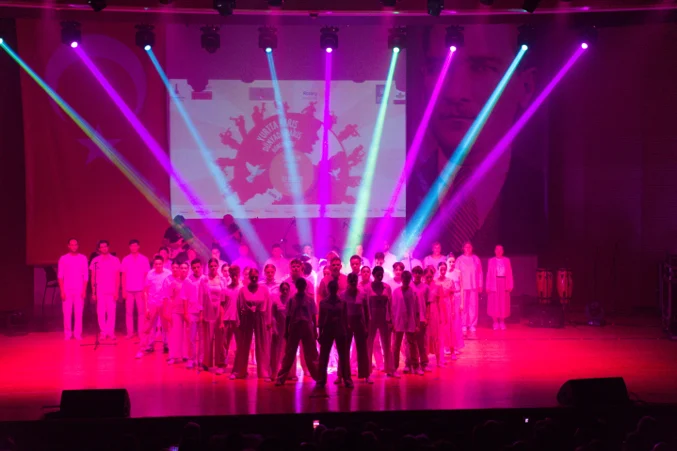
What can readers of The Bridge around the world do to support “Musik für den Frieden” and help the project continue?
Thomas and Ulrike Vogt:
The vision of “Musik für den Frieden” is for more and more musicians – choirs, orchestras and bands – from different countries to come together, united by a shared commitment to peace and organise joint peace concerts. This could eventually lead to major international peace and cultural festivals in cities around the world, involving not only musicians but also other artists – dancers, actors, poets, filmmakers and others – joining together to send a message of peace.
As a worldwide organisation that is not bound to the national interests of any one country, Rotary can embrace this initiative by helping to organise such festivals and supporting them financially.
For 2027, “Musik für den Frieden” is planning a Music Peace Camp in Russia. Depending on the financial resources available, additional music groups could also be invited to participate.
Concrete support could take the form of individual donations and, potentially, funding through a Rotary Global Grant for the “Musik für den Frieden” project.
Further information: www.musik-fuer-den-frieden.de

Rotary Izmir Dokuz Eylül
District 2440, Turkey - Past District Governor
Past Rotary Public Image Coordinator
Turkish Rotary Magazine board member
Active member of the WASH and SRoF fellowships
TRF CADRE

Rotary Paris Agora - Past President 22-23
District 1660, France - Head of IT, Past DPIC
Region 14 - ARPIC
Cercle Polioplus - Co-Founder


 English
  French
  Spanish
  Italian