
To Belong. The Power of Connection and Action
By Wojciech Zipser – Chair ICC Poland-Netherlands
The Eve of the Event
Even before the conference officially opened, participants from various countries met at the homes of local Rotarians for evening conversations. Over a glass of wine and refreshments, new connections—and sometimes warm friendships—were forged on the eve of two intense days at the conference center.
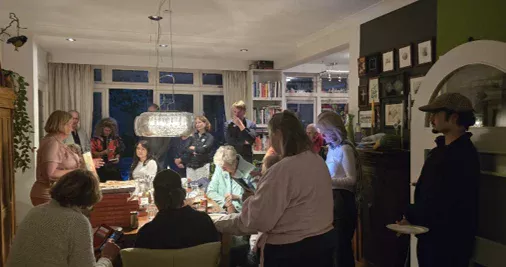
One such Thursday gathering was organized by Annet Weijermars. She is well-known for organizing numerous peace-building initiatives and fostering ties with clubs in our district. Annet took part in the signing of the agreement for the Poland-Netherlands Intercountry Committee (after which we lightened the mood a bit by treating the participants to Dutch cheese).
In the delightful, cozy atmosphere of Annet’s home—and over pizza—conversations centered on two key areas. First, how to use personal and club connections to foster informal ties that lead either to formal agreements between clubs within the ICC framework or to discussions about peace in a broader, personal context.
Second, how to approach the subject of peace not merely by aiming for the absence of war and violence, but by reinforcing positive aspects—such as mutual understanding and creativity—and, above all, by focusing on sustainability and tangible benefits for everyone involved in the process.
Several books on this topic were presented, but my attention was drawn to The Peace Compass by Nina Koevoets; it offers an interesting approach to engaging in peace-building in everyday life. The book has already been translated into several languages, and the idea of a Polish edition immediately came up. I believe this is an initiative worthy of support—especially given that, alongside the full-scale war right next door, we face a daily barrage of ideological and worldview-based skirmishes across all levels of society in Europe and worldwide, not to mention our own battle campaigns that gain momentum as election dates approach.
850 participants
The conference was hosted at the World Trade Center in Rotterdam. The building was considered an architectural masterpiece at the time of its construction and, for many years, towered over the generally low-rise post-war architecture of the historic city center—an area almost completely razed to the ground by the Germans on May 14, 1940, with only a few structures surviving, such as the 19th-century town hall and the Gothic St. Lawrence Church. That bombing served as a stark prompt to seriously consider whether resisting the invader was a viable option. It was. But back to the conference: whether by coincidence or not, its themes resonated in a unique way with the history of the Dutch city that suffered the greatest physical devastation during the war.
Built in 1986, the skyscraper has since been surpassed in height by surrounding structures that shoot even higher into the sky—buildings that also dazzle with their intriguing architecture. Nevertheless, it still rises majestically over a city center where locals say, “Here, we don’t talk; we work.” Meanwhile, the city’s detractors joke that in Rotterdam, you can buy a shirt with the sleeves already rolled up. Though perhaps that is actually a compliment.
Thematic sessions and plenary meetings took place in auditoriums boasting excellent acoustics and audiovisual equipment, ensuring that everything said and shown could be clearly heard and seen from every corner of the room, regardless of its size. Meanwhile, the spacious main hall of the WTC served as a meeting point—and not just in the literal sense. Dubbed the “House of Friendship,” this area was a vibrant hub for networking, showcasing humanitarian projects, and hosting cultural stands featuring local cuisine, handicrafts, and informational materials.
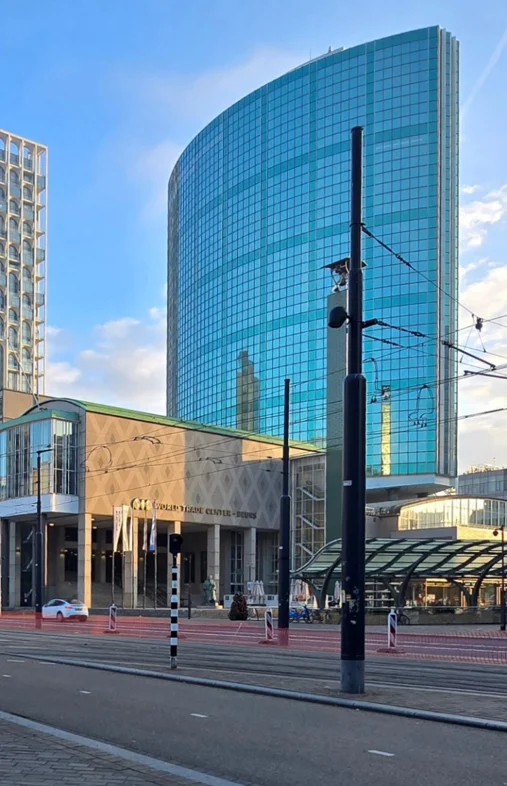
Refreshments and meals were also served here during coffee and lunch breaks. Many participants described the atmosphere as exceptionally energetic and motivating, noting that the exchange of information and ideas complemented the knowledge shared during the thematic seminars.
Link to the conference program:
https://rotary-european-action-summit-2026.yellenge.nl/global-program
The seminars focused on three areas:
- literacy combined with basic communication and numeracy skills,
- mental health
- environmental protection against degradation caused by human activity.
While seemingly distinct, these topics were integrated with our overarching mission—repeatedly emphasized by Yinka—of fostering peace through various means, recognizing that its emergence and sustainability depend on many factors. Communication skills are one such factor, but joining forces in support of nature also bolsters this process. A lack of mutual understanding, and leaving groups with limited voice to fend for themselves, paves the way for a loss of trust in the state and society at large, rising hostility, and specific electoral choices. This creates fertile ground for populism and extremism.
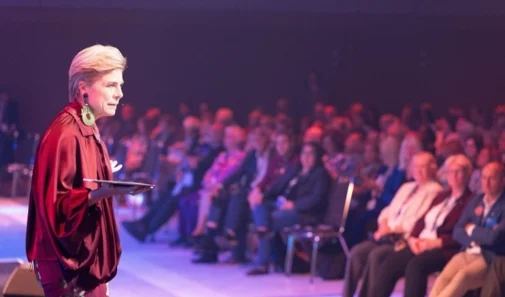
Meanwhile, the Mayor of Rotterdam, Carola Schouten, spoke about actively reaching out to diverse groups of residents in a city of approximately 700,000 people representing 173 nationalities. “We have many affluent communities, but also very impoverished ones,” the mayor noted. It is crucial to give a voice—particularly to those with limited financial, communicative, or social resources—and to ensure they know someone is listening and ready to help with their various challenges. I was reminded of how Rotterdam—along with other cities with significant Muslim populations—responded to the 9/11 attacks on the World Trade Center twenty-five years ago.
Meetings involving people of diverse nationalities and worldviews were organized immediately to address the tragedy collectively and collaboratively. There were also televised discussion panels, and as a result, I do not recall any major acts of aggression occurring in the Netherlands between the opposing sides of the conflict at that time.
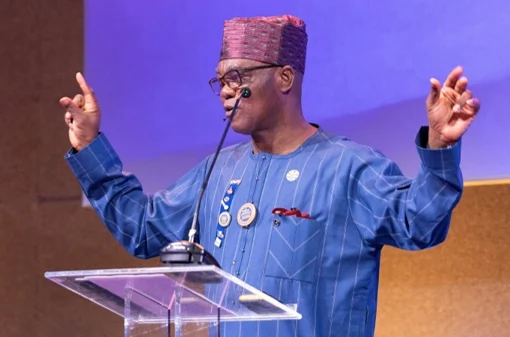
The conference theme—“To Belong: The Power of Connection and Action”—reflects a simple truth, says Yinka: when people feel a sense of belonging, they build relationships and find the courage to act. And when we join forces and take action together, we create lasting change. This summit is intended to serve as a catalyst, not merely an opportunity for conversation. Our goal is clear: to inspire, connect, and mobilize Rotarians, Rotaract members, and partners from across Europe and beyond.
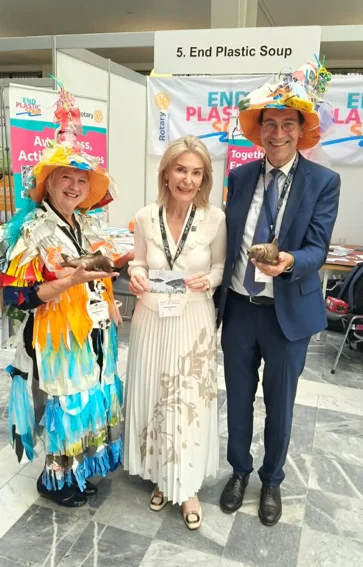
Plastic Soup
We are familiar with nail soup. Besides, a nail doesn’t pose much of a problem; as it rusts, it tends toward a state of equilibrium with its surroundings—something owners of older cars know well. Plastic, however, is here to stay, claiming ever-larger swathes of land and sea, while insidiously—in fragmented form – penetrating deep into the very cells of our bodies.
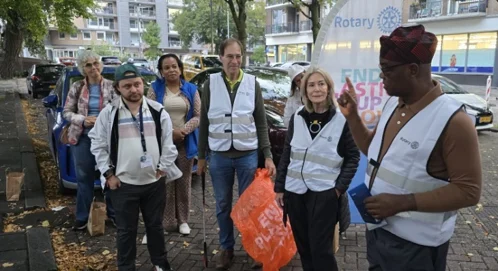
“End Plastic Soup” is a global initiative launched in 2018 by clubs in District 1580 (North Holland) as a foundation affiliated with Rotary International. The goal is ambitious: by 2050, the “plastic soup” will be gone from the oceans and seas, and there will no longer be plastic waste in our lakes, rivers, forests, parks, or on our streets. The program addresses not only visible litter but also plastic pollution throughout the entire product lifecycle. More than 400 Rotary clubs across 51 countries are participating in these efforts. endplasticsoup.org
Water-related topics were the focus of sessions accompanying the Rotary Action Summit. One session showcased WASH RAG (Water, Sanitation, and Hygiene Rotary Action Group), strongly encouraging participation in this global initiative: wash-rag.org
Meanwhile, the issue of plastic pollution was addressed by Ralf Hardenberg (RC Nuremberg) and Gert-Jan van Domelen (RC Huizen-Gooimeer) during a session on Friday.
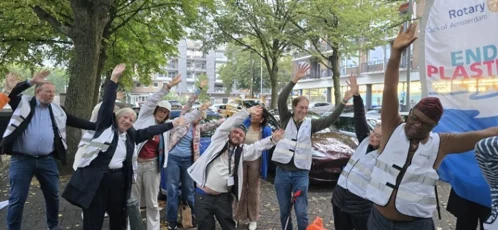
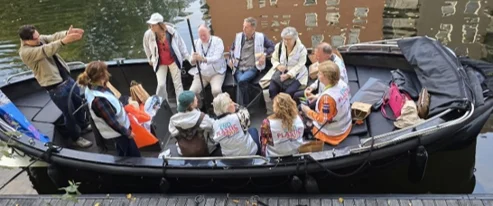
And on Saturday at 7 a.m., words were turned into action. Gert-Jan outlined how the operation would be carried out. Yinka announced its start, reminding everyone of the power of working together.
Together for Peace (link to the event)
For us, as moderators of the ICCs (Intercountry Committees), the “Connecting for Peace” session on September 12th served as the culmination of the message of cooperation. Drawing on over 75 years of cross-border dialogue—initiated by post-war Franco-German cooperation starting in 1950—the session highlighted that peace begins with conversation, and that every conversation can open the door to understanding and mutual agreement.
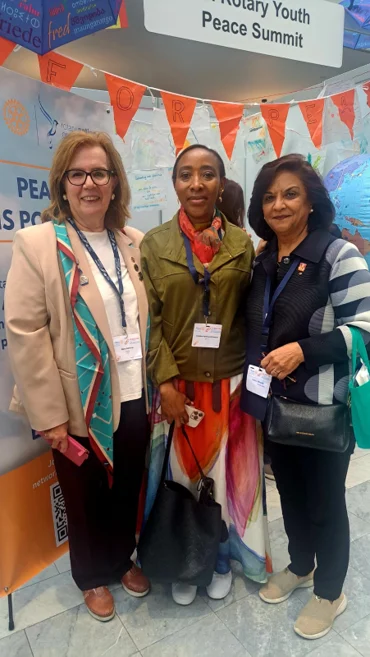
Following an introduction by Rotary International President Olayinka Babalola, we gained expert insight from the Institute for Economics & Peace (IEP) into the global framework for peacebuilding. The event also featured a presentation on the Youth Peace Summit, as well as interactive panels linking the Rotary Action Group for Peace with Rotary’s peacebuilding and conflict prevention programs.
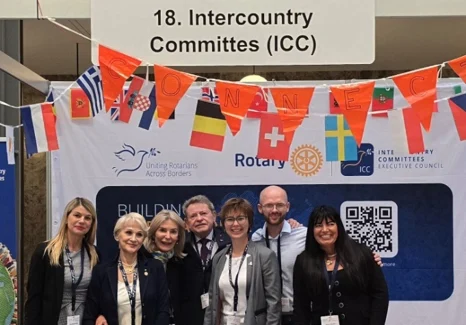
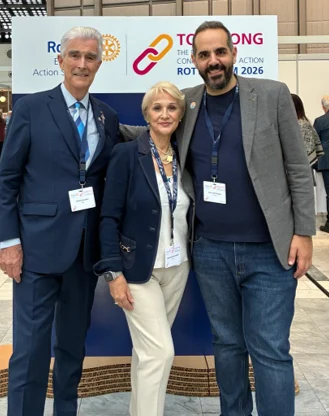
As a group of ICC moderators, we had a booth at the House of Friendship that attracted a great deal of interest. We distributed information about the functioning of the global committee structure and, of course, encouraged people to take initiative.
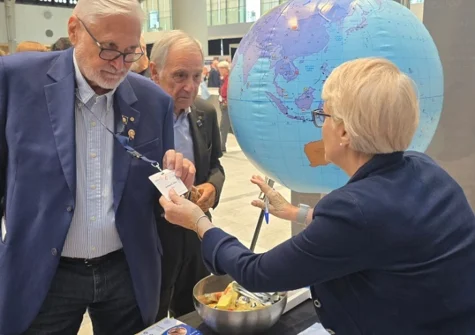
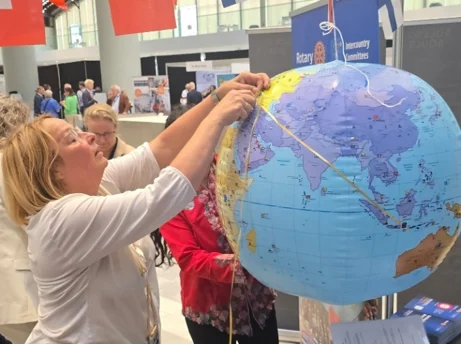
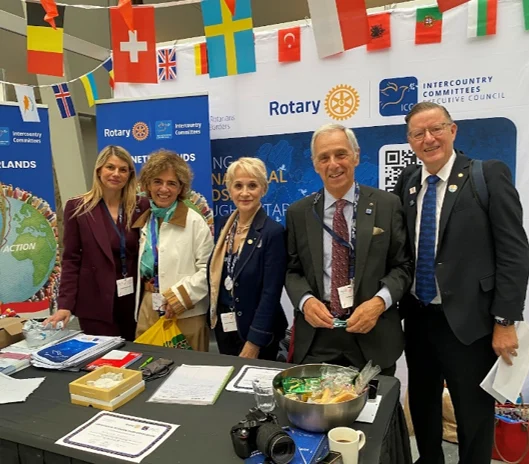
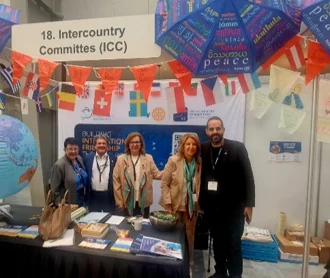
As befits a PR team, we also had a platter full of treats from various countries—and, of course, Polish krówki were included. There was also a “pompous” 3D presentation showing the reach of our ICC contacts.
What connects the House of Friendship, the ICC session, and the evening gatherings in private homes is a simple message: institutions may create frameworks, data, and strategies, but it is human relationships that breathe life into them. The Rotary European Action Summit in Rotterdam demonstrated that friendship is not merely an adjunct to citizen diplomacy—it is its foundation. Every handshake, every shared dinner, and every conversation at a local food stall in the House of Freedom during our conference served as a building block for a bridge between nations.
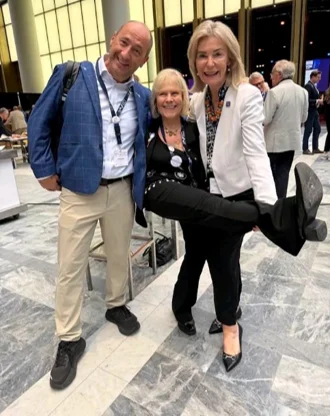
May this event serve as a reminder that world peace is not an abstract goal for distant institutions, but something each of us can begin building today—by opening the doors of our homes, both literally and figuratively, and by listening and showing respect as we seek common ground.

Rotary Paris Agora - Past President 22-23
District 1660, France - Head of IT, Past DPIC
Region 14 - ARPIC
Cercle Polioplus - Co-Founder


 English
  French
  Spanish
  Italian